
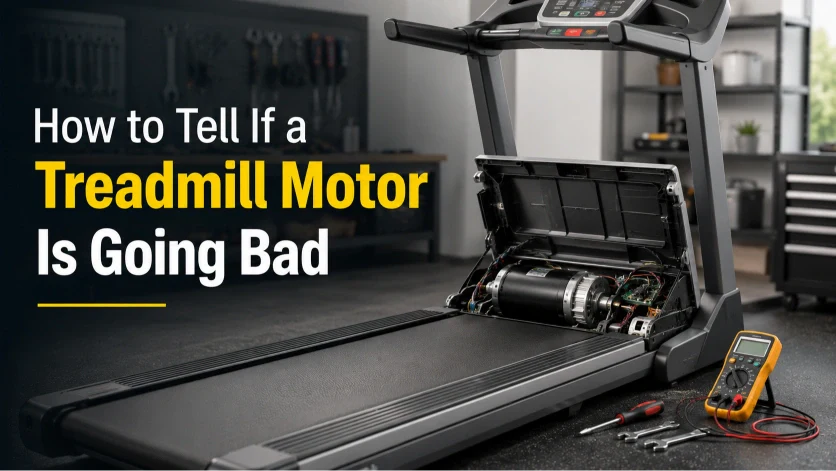

A treadmill can show warning signs before it stops working completely. Sometimes the belt slows down. Sometimes the machine shuts off in the middle of a workout. In other cases, you may notice a burning smell, strange noise, or weak movement when you step on the belt.
These problems can make people think the treadmill motor is going bad, but the motor is not always the only possible cause. A worn walking belt, dry deck, loose drive belt, bad control board, speed sensor issue, or electrical problem can create similar symptoms.
Before replacing anything, it is better to understand what the symptoms mean. If the issue points to the drive motor, Cardio Equipment Parts offers a treadmill drive motor repair service that helps customers repair the existing component instead of guessing or buying the wrong part.
Quick Answer: How Do You Know If a Treadmill Motor Is Going Bad?
A treadmill motor may be going bad if the belt slows down when you step on it, the machine loses speed during use, the motor smells hot or burned, the treadmill shuts off after a few minutes, or the belt runs unevenly even after basic maintenance.
However, these signs do not always mean the motor itself has failed. The treadmill may be working too hard because of extra friction from the walking belt or deck. It may also have an issue with the controller, wiring, drive belt, or speed sensor.
The best first step is to check the simple causes. If the problem continues, the drive motor may need professional inspection, testing, or repair.
Common Signs of a Bad Treadmill Motor
The Belt Slows Down When You Step on It
One of the most common signs of a motor problem is a treadmill belt that runs normally with no weight on it but slows down when someone steps on it.
This can happen when the drive motor is weak and cannot keep steady power under load. It can also happen when the walking belt and deck create too much friction. When the belt is dry, worn, or too tight, the motor has to work harder than normal.
If your treadmill slows down only during use, do not assume the motor is the only issue. Check the walking belt, belt tension, deck condition, and lubrication first.
The Treadmill Has a Burning Smell
A burning smell is never something to ignore. It may come from an overheated drive motor, but it can also come from the walking belt, deck friction, control board, wiring, or dust buildup inside the machine.
If you smell burning, stop using the treadmill and unplug it. Let the machine cool down before checking anything. Continuing to run the treadmill can make the problem worse and may damage more parts.
A burning smell combined with speed loss, shutdowns, or visible electrical damage is a stronger warning sign that the machine needs professional attention.
The Treadmill Shuts Off During Use
If your treadmill starts normally but shuts off after a few minutes, the motor may be overheating or drawing too much power. This can happen when the motor is worn, but it can also happen when the belt and deck create too much resistance.
A treadmill that shuts off under load may be protecting itself from damage. It may also be reacting to a failing control board, loose wire, or overloaded electrical component.
If the machine keeps stopping during normal use, do not keep restarting it without checking the cause.
The Speed Changes Without Warning
A treadmill should hold a steady speed once you select the setting. If the belt speeds up, slows down, surges, or hesitates without you touching the controls, something is wrong.
Speed changes can point to a weak drive motor, but they may also come from the lower control board, speed sensor, wiring, or belt tension. This is why diagnosis matters. Replacing the wrong part can waste money and still leave the treadmill with the same problem.
The Motor Makes Unusual Noise
A treadmill motor that is wearing out may make a rough, grinding, whining, or strained sound. But noise can also come from the front roller, rear roller, drive belt, bearings, or loose parts inside the treadmill.
Listen carefully to where the sound is coming from. If the noise is coming from the motor area and gets worse when the treadmill is under load, the motor may need inspection.
Bad Motor or Another Treadmill Problem?
Many treadmill problems look similar from the outside. That is why it helps to compare symptoms before deciding what to do.
| Symptom | Possible Motor Issue | Other Possible Cause |
|---|---|---|
| Belt slows under weight | Weak drive motor | Dry belt, worn deck, tight belt |
| Burning smell | Overheating motor | Belt friction, dust, wiring, control board |
| Treadmill shuts off | Motor overload | Controller issue, power issue, high friction |
| Speed fluctuates | Motor or controller problem | Speed sensor, wiring, belt tension |
| Loud noise | Worn motor parts | Roller, drive belt, bearings |
| Belt does not move | Motor failure | Control board, safety key, wiring, drive belt |
This is why it is smart to troubleshoot before ordering parts. If the problem is actually the control board, belt, deck, or wiring, replacing the drive motor will not solve it.
If the symptoms continue after basic checks, Cardio Equipment Parts can help with a drive motor repair service designed for customers who need the component inspected, rebuilt, tested, and returned.
How to Check If the Motor Is the Problem
1. Unplug the Treadmill First
Before checking anything inside the treadmill, unplug the machine. Do not remove covers, touch wiring, or inspect internal parts while the treadmill is connected to power.
This is especially important if you noticed a burning smell, shutdowns, sparks, or visible electrical damage.
2. Check the Walking Belt
The walking belt should move smoothly. If it feels dry, tight, uneven, or worn, it can put extra stress on the motor.
A worn belt can also create drag. That drag forces the drive system to work harder, which can lead to overheating, speed loss, or shutdowns.
3. Check the Deck
The deck is the surface under the walking belt. Over time, it can wear down or lose its smooth finish. When the deck creates too much friction, the treadmill may act like the motor is failing even if the motor is still working.
If the deck is rough, damaged, cracked, or heavily worn, it should be addressed before blaming the motor.
4. Check Belt Tension
A belt that is too tight can overload the motor. A belt that is too loose can slip. Both problems can make the treadmill feel weak or unstable.
If the belt slips when you step on it, the issue may be adjustment-related. If the belt is too tight and the machine slows down, the motor may be working harder than it should.
5. Look for Dust, Hair, and Debris
Dust and debris can collect around the motor area, especially on home treadmills that sit near carpet, pets, garages, or laundry rooms.
Too much buildup can reduce airflow and make the machine run hotter. Carefully cleaning the motor compartment may help, but avoid touching electrical parts if you are not comfortable working around treadmill components.
6. Check for Visible Damage
Look for loose wires, burn marks, melted connectors, or a strong electrical smell. These signs may point to a wiring or control board issue instead of only a motor issue.
If you see damage, it is better to stop using the treadmill and get help before the problem spreads to more expensive components.
7. Compare No-Load and Loaded Performance
Run the treadmill at a low speed with nobody on it. Then test how it behaves when someone steps onto the belt.
If it works with no weight but slows, hesitates, or shuts off under load, the machine may be struggling with friction, motor strain, or power delivery.
This is one of the strongest signs that the drive system needs closer inspection.
When Does a Treadmill Motor Need Repair?
A treadmill motor may need repair when the same symptoms continue after basic maintenance and adjustment. This includes:
-
The belt keeps slowing down under weight
-
The motor gets hot quickly
-
The machine smells burned
-
The treadmill shuts off during normal use
-
Speed changes without warning
-
The motor makes rough or strained noise
-
The treadmill does not start even when the console powers on
-
The issue returns after checking the belt and deck
Cardio Equipment Parts offers a repair service where customers purchase the service, ship the component to their Romeoville, IL facility, and the team handles inspection, rebuilding, testing, and return shipping. Their process may include resurfacing the commutator, installing new bearings, replacing carbon brushes when needed, internal cleaning, and load testing before return.
That is a better option than guessing, especially when the treadmill is still in good condition and the problem is limited to the drive system.
Can You Keep Using a Treadmill With a Bad Motor?
You should not keep using a treadmill if it smells like burning, shuts off repeatedly, sparks, overheats, or loses speed under normal use.
Using the treadmill while it is struggling can cause more damage. It may affect the control board, belt, deck, wiring, or other components. What starts as one repair can become a bigger and more expensive problem.
If the treadmill feels unsafe or unreliable, stop using it until the issue is checked.
Motor Repair vs. Buying a Replacement Part
Many people assume they need to replace the part right away, but repair may be a better option in some cases.
A repair service can make sense when:
-
The treadmill is still worth keeping
-
The frame, console, belt, and deck are in good condition
-
The issue is isolated to the drive motor
-
A compatible replacement is hard to find
-
You want the original component inspected and rebuilt
-
You want testing before the part is returned
Replacement may make more sense when the part is physically destroyed, unavailable for repair, or when multiple major treadmill components are already failing.
This is why diagnosis matters. The goal is not just to get the treadmill moving again. The goal is to fix the real cause of the problem.
How the Cardio Equipment Parts Repair Service Works
Cardio Equipment Parts offers a mail-in repair option for customers who need help with treadmill and fitness equipment components.
The process is simple:
First, you order the repair service. This starts the process and lets the team know your shipment is coming.
Next, you remove and ship the component. The company asks customers to use a heavy-duty box with dense cushioning, such as thick bubble wrap or solid foam. Loose packing peanuts should not be used because heavy parts can shift during shipping and arrive damaged.
Once the part arrives, the team inspects and rebuilds it. Depending on the condition, the service may include internal cleaning, bearing replacement, commutator resurfacing, carbon brush replacement when needed, and testing.
After the repair, the component is shipped back so it can be reinstalled.
For customers who are not sure what is wrong, the company also offers a free diagnostic tool and support options to help identify the likely issue before ordering a service.
How to Help Your Treadmill Last Longer
You can reduce the risk of drive system problems by keeping up with basic treadmill care.
Keep the belt and deck properly maintained according to your treadmill model. Do not overtighten the walking belt. Keep the motor area clean and free from dust, hair, and debris. Make sure the treadmill has proper ventilation and is not pushed tightly against a wall or covered while in use.
Also pay attention to small warning signs. A belt that starts slipping, slowing, or making noise should be checked early. Waiting too long can put more strain on the motor and control board.
Good maintenance does not prevent every failure, but it can help protect the treadmill from unnecessary stress.
What to Do If You Think Your Treadmill Motor Is Going Bad
Start with the simple checks: belt condition, deck condition, lubrication, belt tension, visible wiring, and debris around the motor area.
If the treadmill still slows down, shuts off, smells burned, or changes speed by itself, the drive motor or control board may need professional attention.
Instead of replacing parts blindly, consider using the treadmill motor repair service from Cardio Equipment Parts. It is designed for customers who want the existing component inspected, serviced, tested, and shipped back.
That can be a practical choice when the treadmill is still worth repairing and you want help finding the real cause of the problem.
FAQ
How do I know if my treadmill motor is going bad?
Common signs include belt slowdown under weight, burning smell, overheating, shutdowns during use, unstable speed, or unusual noise from the motor area. These symptoms can also come from the belt, deck, control board, wiring, or speed sensor.
Why does my treadmill slow down when I step on it?
The treadmill may slow down because the drive motor is weak, but it can also happen when the walking belt is dry, worn, too tight, or creating too much friction against the deck.
Is a burning smell always caused by the motor?
No. A burning smell can come from an overheated motor, but it may also come from belt friction, dust buildup, damaged wiring, or a control board issue. Stop using the treadmill until the cause is checked.
Can a treadmill motor be repaired?
Yes, in many cases it can be repaired or rebuilt, depending on the damage. Cardio Equipment Parts offers a mail-in repair service that includes inspection, internal cleaning, rebuilding steps, and testing before return.
Should I repair the motor or replace the treadmill?
Repair may be worth it if the treadmill frame, console, belt, deck, and other major components are still in good condition. If several expensive parts are failing, replacing the treadmill may make more sense.
Can a bad control board look like a motor problem?
Yes. A failing lower control board can cause speed changes, no-start issues, shutdowns, or weak belt movement. That is why diagnosis is important before replacing or repairing any part.
What should I include when asking for help?
Send your treadmill brand, model number, symptoms, error codes if available, and clear photos of the component and wiring. This makes it easier to identify the likely cause.
Do I have to ship the whole treadmill for repair?
No. For the mail-in repair service, you ship the specific component, not the full treadmill. This makes the process easier and more practical for many customers.